Shelter3 min read
A two-person label tells you the intended sleeping capacity, but not how comfortably your own pads, bodies and essential belongings fit. Before buying or renting a shelter, compare the usable floor, wall shape and access. A simple layout exercise reveals limitations that a capacity number leaves hidden.
Read the guide ↗
Shelter3 min read
A footprint is an additional ground layer, not a universal cure for a poorly chosen site or a leaking shelter. Its dimensions and attachments need to match the tent. Check those details before assuming that a sheet with a similar advertised capacity will work underneath your particular model.
Read the guide ↗
Shelter3 min read
Water droplets inside a tent do not all have the same explanation. Occupants, damp equipment and humid conditions can contribute to condensation. Learn to identify the pattern, use the shelter’s intended ventilation and record what happened before declaring every wet surface a hole or a failed waterproof coating.
Read the guide ↗
Sleep systems3 min read
The temperature printed in a sleeping bag’s name may not mean what you assume. Standardized reference ratings describe particular test conditions, and individual warmth varies. Read the full rating information and build a complete sleep system before using one headline number to plan an overnight trip.
Read the guide ↗
Sleep systems3 min read
A sleeping bag can have a suitable published rating and still fit poorly. Length, shoulder space, foot position and normal movement influence how it feels and how its insulation is used. Try the complete sleeping arrangement rather than choosing solely from your standing height or the bag’s packed size.
Read the guide ↗
Sleep systems3 min read
Sleeping-pad thickness, softness and insulation are related decisions, but they are not the same specification. R-value gives a reference for thermal resistance under a stated test. Read that information alongside usable dimensions, comfort and the complete sleep system instead of choosing the thickest-looking pad.
Read the guide ↗
Sleep systems3 min read
An inflatable pad’s small valve and repair kit matter as much as its packed size when something goes wrong. Learn the controls and exact repair method before departure. A random patch or a familiar-looking valve is not evidence that you can restore the particular pad you are carrying.
Read the guide ↗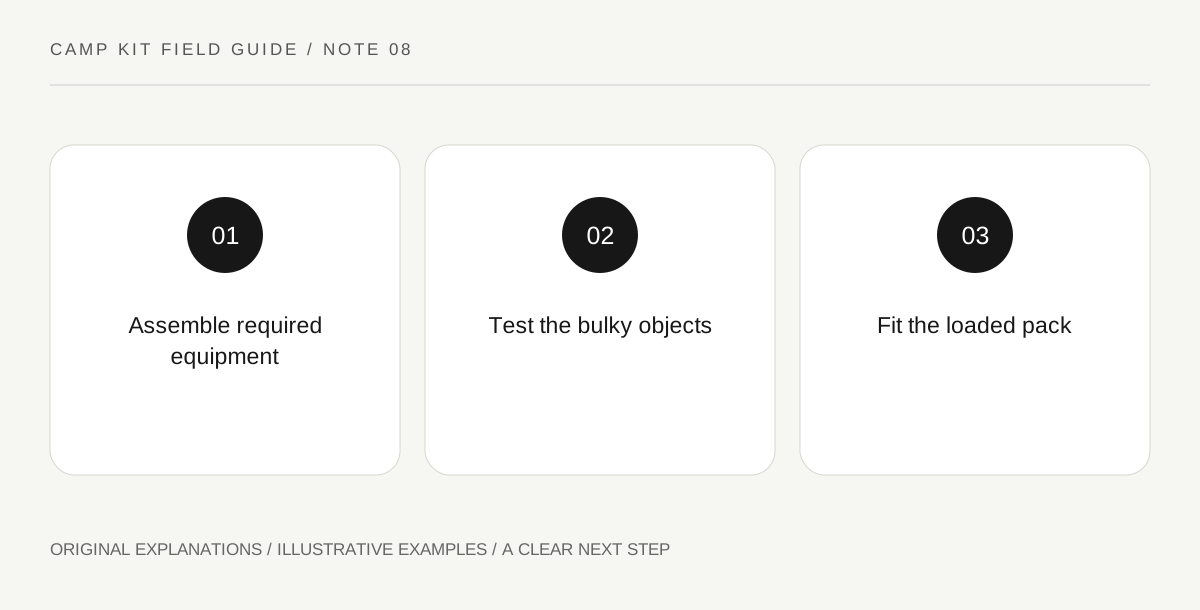
Packing and care3 min read
A pack selected for a day outing may not accommodate a complete overnight system. Shelter, sleep equipment, food storage and water interact in both volume and carried weight. Assemble the actual camping load before choosing a capacity, and test the pack with that load rather than an empty shop sample.
Read the guide ↗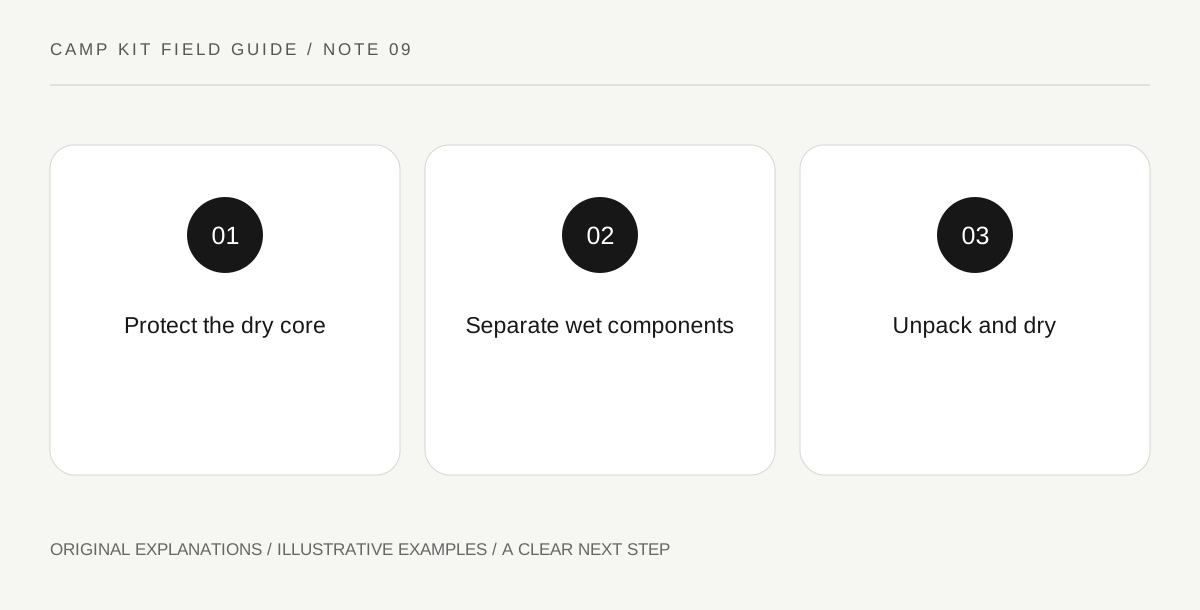
Packing and care3 min read
A rain cover is only one part of protecting an overnight load. Wet tent fabric, damp clothing and the way you open the pack can move moisture toward bedding even after rain stops. Organize a dry core and a separate wet-gear route before the trip rather than improvising around a soaked sleeping bag.
Read the guide ↗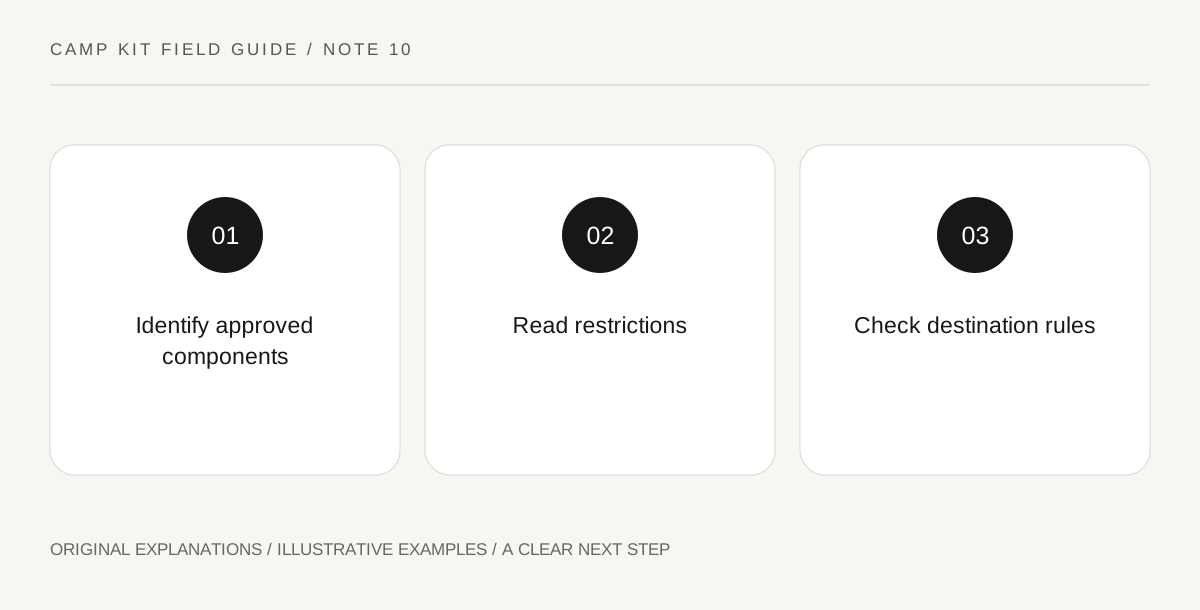
Camp kitchen and water3 min read
A stove, fuel container and pot are a connected system. Similar-looking threads or a stable-looking improvised arrangement do not establish compatibility. Before a trip, identify the exact components and read the current manufacturer instructions, including restrictions that may differ sharply from those of another stove you have used.
Read the guide ↗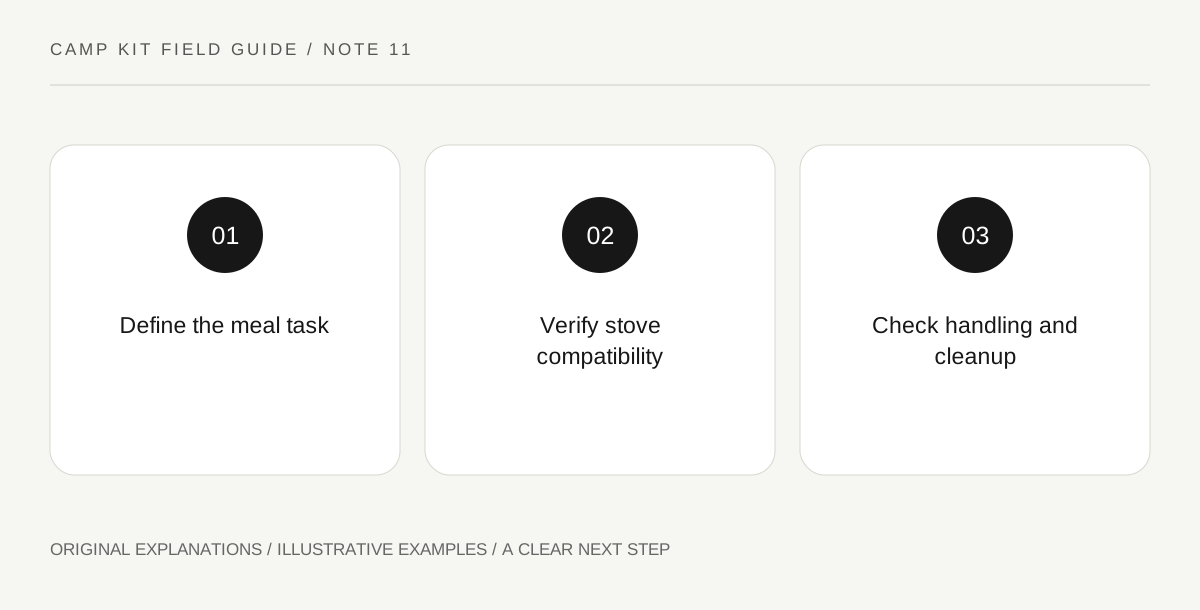
Camp kitchen and water3 min read
A compact cookset is useful only if its pieces work with your stove and the meals you actually plan. Pot capacity, support, handles and cleaning access belong in the same decision. Compare the complete cooking task instead of choosing a set from the number of nested accessories alone.
Read the guide ↗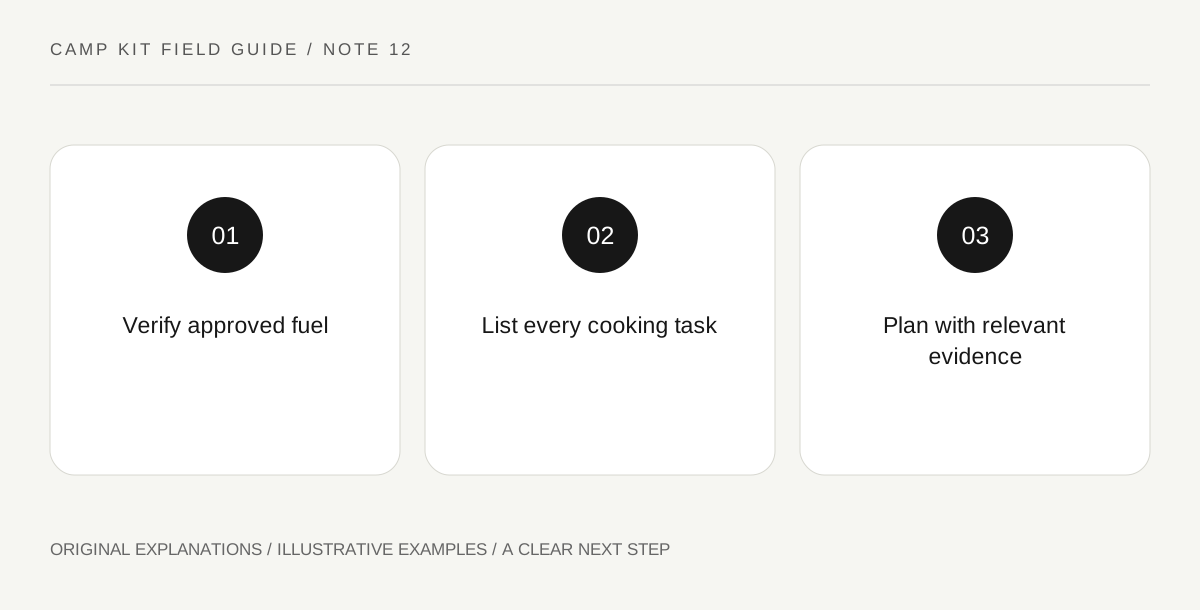
Camp kitchen and water3 min read
A generic fuel allowance cannot know your stove, menu, conditions or group. Start with approved equipment and the actual cooking tasks, then use relevant manufacturer information and suitable practice records. Keep an alternative meal plan rather than relying on an invented universal number of boils per container.
Read the guide ↗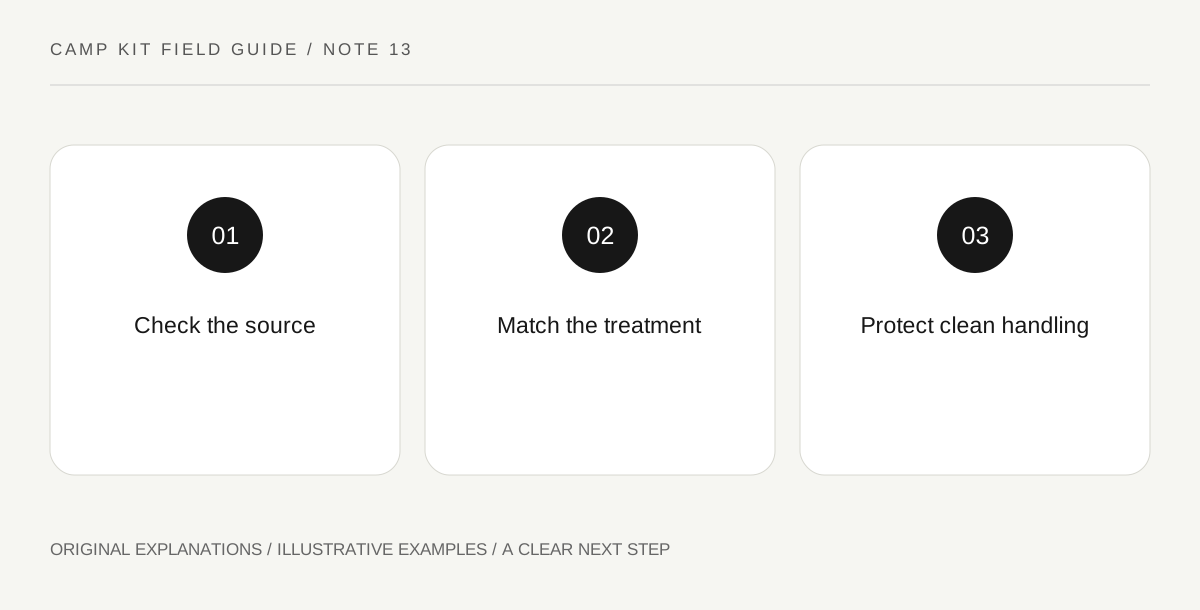
Camp kitchen and water3 min read
A small filter is not automatically a complete water-treatment plan. Different methods address different hazards, and the equipment has conditions of use. Establish what is known about your water source, read appropriate public-health guidance and match the exact product instructions before treating a clear stream as safe.
Read the guide ↗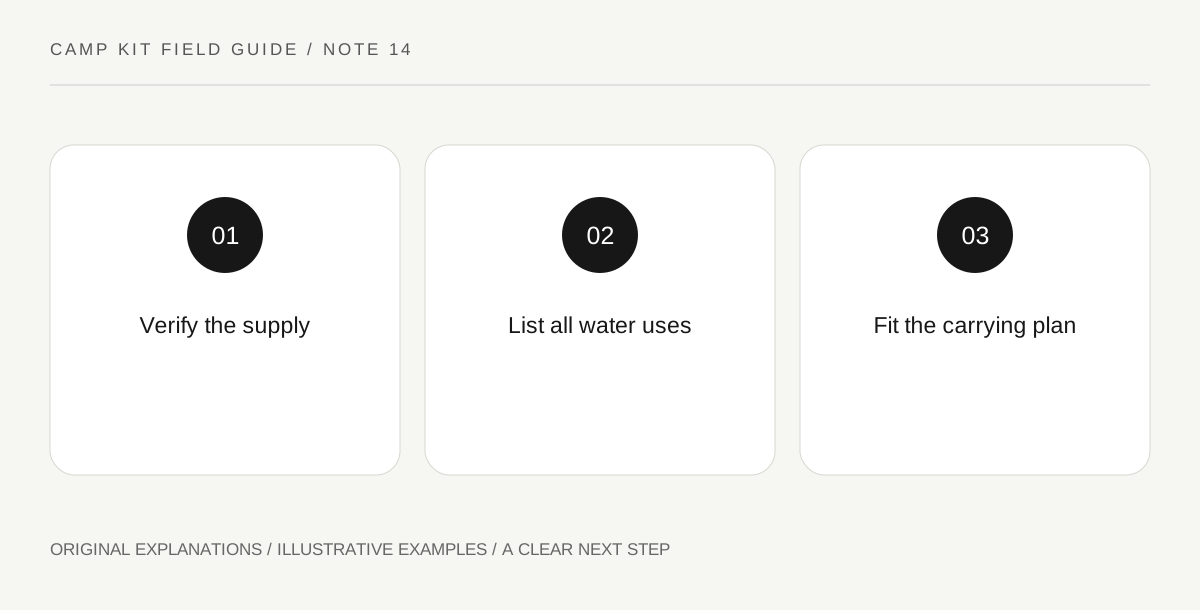
Camp kitchen and water3 min read
Container capacity and actual water availability are different parts of a camping plan. A large empty jug does not solve an uncertain source, and a small personal bottle may not cover cooking or cleanup tasks. Map the actual uses and refill opportunities before deciding what the group will carry.
Read the guide ↗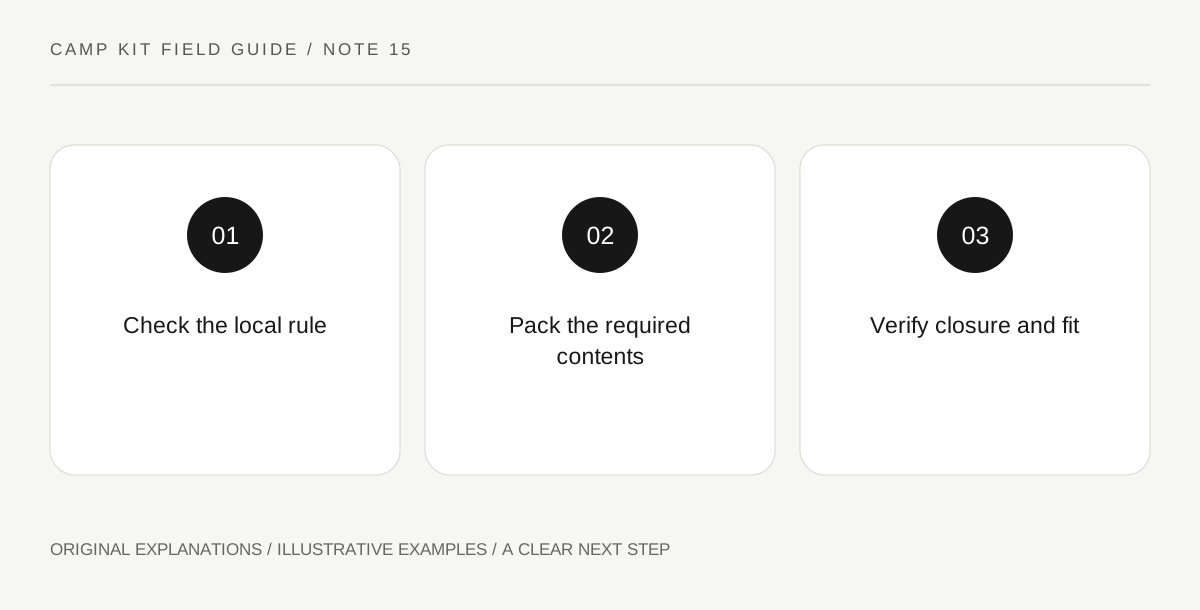
Packing and care3 min read
A container described as bear-resistant is not automatically accepted at every destination. Rules can specify permitted designs and storage practices. Check the current local requirements, then test the complete food and scented-item load in the actual approved container before deciding that its advertised capacity is sufficient.
Read the guide ↗
Packing and care3 min read
A maximum lumen figure does not tell you how useful a headlamp will be through an evening at camp. Beam shape, mode-specific runtime, controls and the intended power source matter together. Compare the actual tasks you need to perform, rather than pairing the brightest number with an unrelated longest-runtime claim.
Read the guide ↗
Packing and care3 min read
A repair pouch becomes more useful when every item has a defined job and a compatible component. Random tape and tools do not establish that you can restore a tent pole, buckle or air-holding pad. Build a small kit around the equipment you actually carry and the problems it can reasonably address.
Read the guide ↗
Camp kitchen and water3 min read
A small bottle of soap does not by itself make a complete campsite cleaning system. Water, suitable containers, drying and wastewater disposal all matter. Plan those tasks for the actual campsite facilities and current land-manager rules before deciding which kitchen accessories to leave at home.
Read the guide ↗
Packing and care3 min read
Renting and borrowing can be sensible ways to try camping equipment, but a reservation or familiar model name does not show the condition and completeness of the item you will receive. Inspect the actual kit, confirm instructions and practice the intended setup while there is still time to resolve a problem.
Read the guide ↗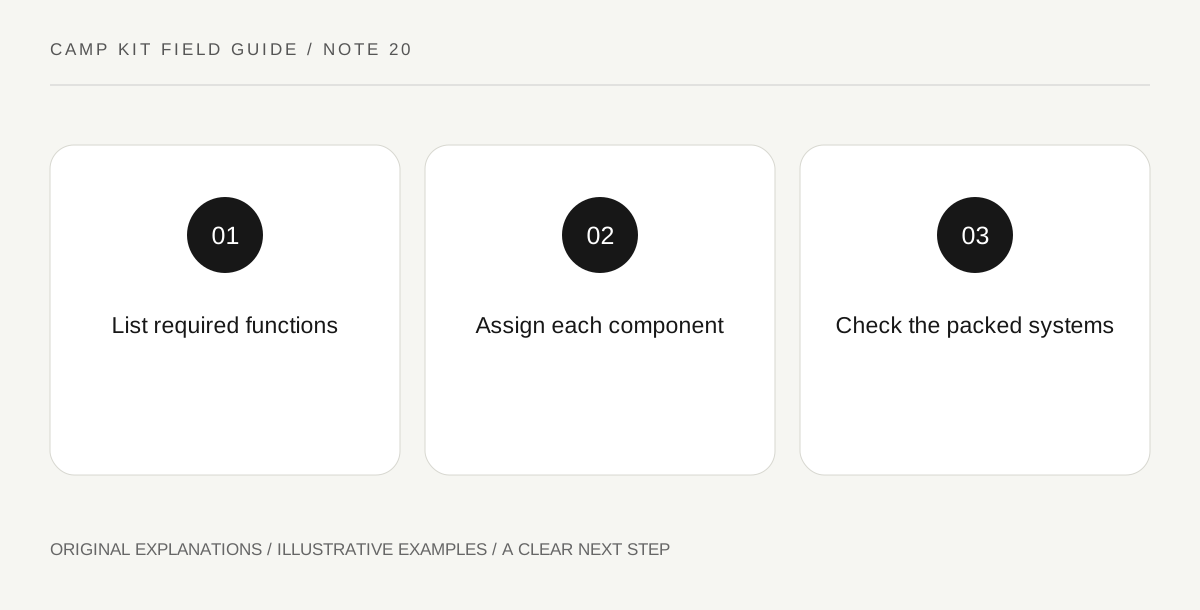
Packing and care3 min read
Sharing a shelter or kitchen can reduce duplicated equipment, but it also creates dependencies. A group needs to know who carries each component, which tasks rely on it and what happens if plans change. Build an explicit shared inventory rather than assuming someone else packed the missing part.
Read the guide ↗