Dry Packing: Separate Critical Sleep Gear From a Wet Shelter
A rain cover is only one part of protecting an overnight load. Wet tent fabric, damp clothing and the way you open the pack can move moisture toward bedding even after rain stops. Organize a dry core and a separate wet-gear route before the trip rather than improvising around a soaked sleeping bag.
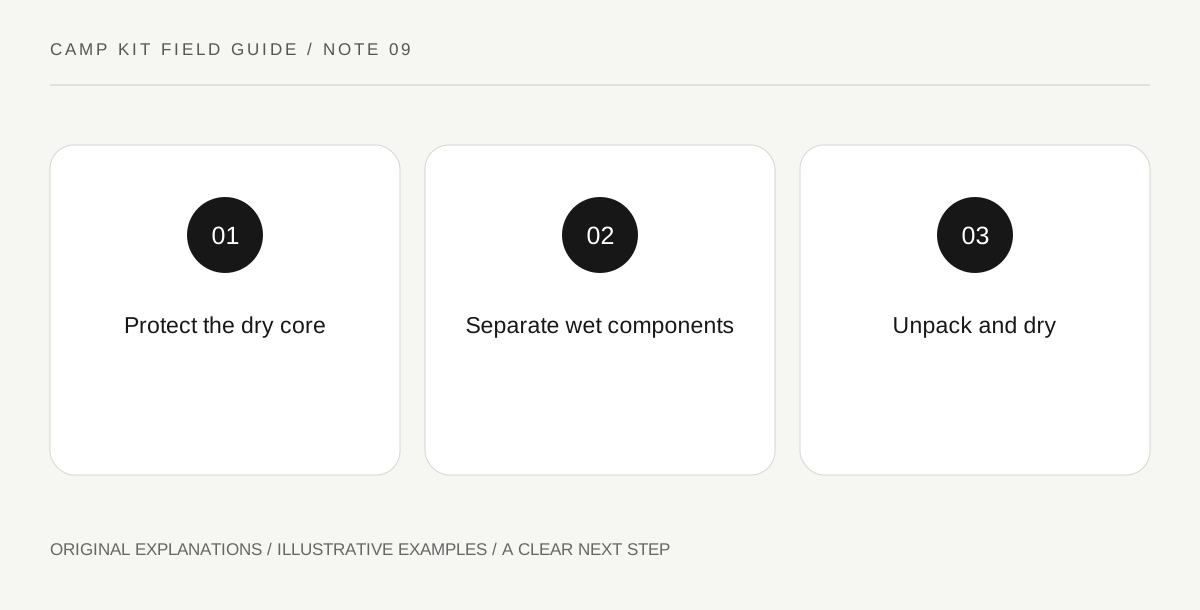
Original explanatory diagram. Read the full method and limitations below.
Define which items must stay dry
Identify the sleep insulation and dry clothing that belong to the planned overnight system. Place them in an appropriate protective arrangement that fits the pack and follows the relevant equipment guidance. Do not assume a standard stuff sack, zip or rain cover is a waterproof guarantee without checking its intended use.
Keep the arrangement simple enough to close correctly during an ordinary stop. A complicated set of tiny bags can create more opportunities to leave something open or lose an essential item. The purpose is to protect critical functions while preserving access, not to buy a separate accessory for every object in the pack.
Give wet equipment a separate path
A damp shelter can transfer moisture to items beside it. Plan where it will travel and how you will prevent that contact, using a suitable separate bag or compartment without overloading unapproved attachments. The exact arrangement depends on the pack and shelter rather than a universal rule about where every tent must go.
Keep food storage and contaminated equipment requirements in mind. A wet item that also smells of food may need a different storage solution at camp. Do not use a dry-bag arrangement as a reason to ignore wildlife rules. Weather protection and animal-resistant storage solve different problems, and one does not automatically provide the other.
Practice the arrival and departure sequence
At a low-consequence practice setup, think through what happens when you reach camp in rain. Which component opens first, where will bedding wait, and how will you avoid placing dry insulation on a wet surface? Use the actual shelter instructions rather than inventing an unsupported pitching configuration.
Departure deserves the same attention. Keep wet fabric separate while packing and close the dry system before handling other damp equipment. The sequence can be rehearsed without deliberately exposing gear to dangerous conditions. A clear routine reduces avoidable contact but cannot guarantee that the system remains dry in every storm or accident.
Unpack and dry after travel
Temporary moisture separation during transport is not long-term storage. Unpack promptly after the trip, dry components fully according to their care instructions and inspect for damage or trapped moisture. The manufacturer’s tent-care guidance emphasizes drying before storage; compression can hide the problem.
Record which part of the packing routine failed if bedding became damp. The cause might be an unclosed bag, moisture transferred during setup or an unsuitable component, rather than rain entering through the pack exterior. Fixing the actual route is more useful than assuming a second rain cover solves every source of moisture. Revise equipment or plans if critical insulation cannot be protected adequately.
A planning scenario
After a rainy final night, an illustrative group has a wet fly but dry bedding. They close the protected sleep package first, pack the damp shelter separately and arrange to unpack and dry everything at home that day. They do not store the wet shelter inside a sealed bag indefinitely. This example explains an organization method; it does not certify any unspecified bag, cover or attachment as waterproof.
Practical checks
Optional checkboxes save only in this browser.
Questions that come up
Does a pack rain cover protect every moisture route?
No. Water and damp equipment can affect contents during access, setup or packing. A cover may help within its limits, but the complete organization and component specifications matter.
Can a wet tent stay sealed until the next trip?
Do not treat a transport arrangement as long-term storage. Follow the tent’s care instructions, unpack promptly and dry it fully before storing it for later use.
References and scope
These sources support the factual background. Examples and exercises are original illustrative teaching material. References do not imply endorsement.
- Cascade Designs: Tent cleaning and drying — Model-family care instructions, moisture and storage limitations.
- Denali National Park: Gear checklist — The interaction of a loaded backpack, food storage, shelter, water and navigation in one particular park.