Shared Camping Equipment: Assign Components and Check the Complete Load
Sharing a shelter or kitchen can reduce duplicated equipment, but it also creates dependencies. A group needs to know who carries each component, which tasks rely on it and what happens if plans change. Build an explicit shared inventory rather than assuming someone else packed the missing part.
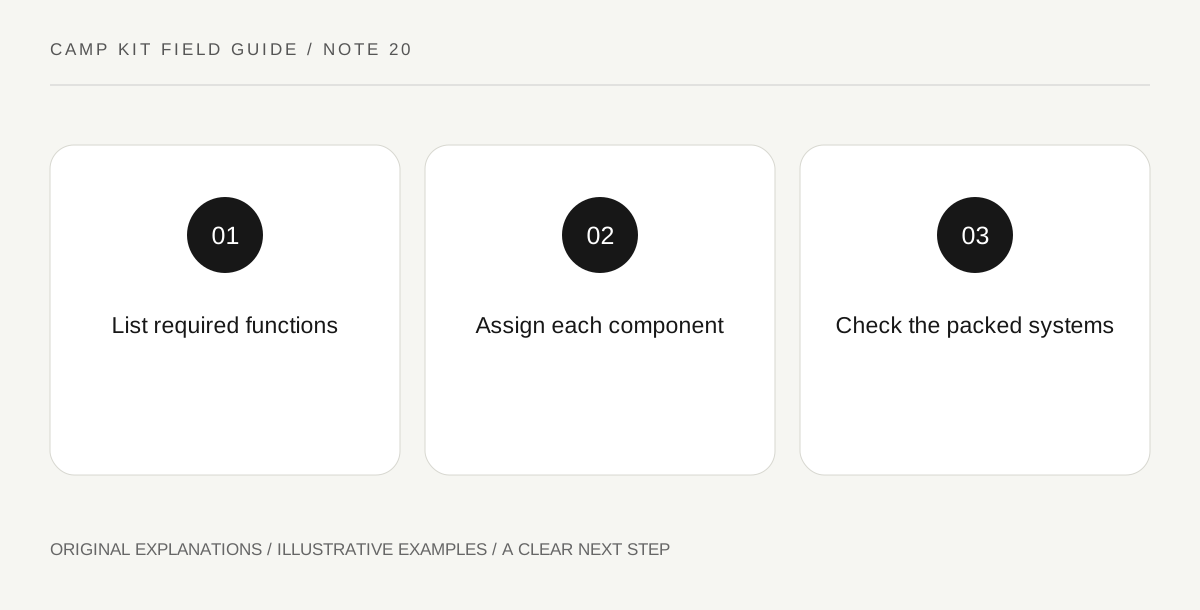
Original explanatory diagram. Read the full method and limitations below.
Separate personal and shared functions
List shelter, sleep, cooking, water, navigation, lighting and other required functions for the actual trip. Decide which items are personal and which are deliberately shared. Some functions may need an appropriate individual arrangement even when the group has one large shared item.
Use current destination requirements and competent trip guidance rather than deleting items simply because the spreadsheet looks heavy. A useful inventory explains each component’s job. It does not certify a minimal list for every condition. If an essential function is unresolved, address the plan before optimizing small weight differences in optional accessories.
Assign whole systems or explicit components
A shared tent can be split among people, but the group should know where body, fly, poles and stakes are. A stove without approved fuel or a treatment device without its required collection container is an incomplete system. Record the component allocation and check it against the actual physical kit.
If the group may separate, consider the consequences of that distribution. Someone carrying only the fly does not have a complete shelter because the poles are elsewhere. The point is not that every system must always be duplicated, but that the dependency must be understood and appropriate to the route and group plan.
Use measured weight without making it a safety score
Where weight comparison is useful, weigh actual equipment on a consistent basis and state whether containers, accessories and consumables are included. A catalogue minimum weight may omit parts that the group actually carries. Keep food, water and other changing quantities identifiable.
Do not assume equal pack weights create equal effort or suitability for every person. Fit, experience, route conditions and individual needs matter. Discuss a reasonable allocation and seek appropriate advice for unfamiliar loads. The number is a planning description, not a safe carrying limit or a test of someone’s willingness to contribute.
Run a physical departure check
Lay out the complete kit and compare it with the inventory. Check closures, necessary instructions and the location of repair or alternative arrangements. Then confirm changes after the last packing adjustment. A list written a week earlier does not show what is actually in the bags today.
Keep the shared record available to the people who need it, without relying on an internet connection at camp. Agree how route changes and missing equipment will be handled. After the trip, update the list from concrete observations rather than automatically adding or removing gear after one anecdote. A complete shared plan connects ownership, component location and the function that each item supports.
A planning scenario
An illustrative group splits a tent across two packs and lists one shared cookset. A physical check reveals that the stakes were left in a vehicle and the planned water-treatment container is missing. They resolve both gaps before departure and document where each system component travels. The example teaches dependency checking; it does not prescribe equal pack weights or establish a universally complete camping list.
Practical checks
Optional checkboxes save only in this browser.
Questions that come up
Should every camper carry identical weight?
Not necessarily. Fit, ability, experience and individual circumstances differ. Use weight as one planning input and agree an appropriate allocation rather than treating equality as a universal safety rule.
Does a shared equipment list replace a trip plan?
No. It records components and dependencies. Route, conditions, skills, current rules and an appropriate response to problems still need their own planning.
References and scope
These sources support the factual background. Examples and exercises are original illustrative teaching material. References do not imply endorsement.
- Rocky Mountain National Park: Wilderness planning checklist — A destination-specific example of an overnight equipment system and changing seasonal needs.
- Denali National Park: Gear checklist — The interaction of a loaded backpack, food storage, shelter, water and navigation in one particular park.
- National Park Service: Cooking in camp — Meal planning, food organization and campsite cleanup; destination rules take priority.