An Overnight Backpack: Fit the Full Camping Load Before Choosing Capacity
A pack selected for a day outing may not accommodate a complete overnight system. Shelter, sleep equipment, food storage and water interact in both volume and carried weight. Assemble the actual camping load before choosing a capacity, and test the pack with that load rather than an empty shop sample.
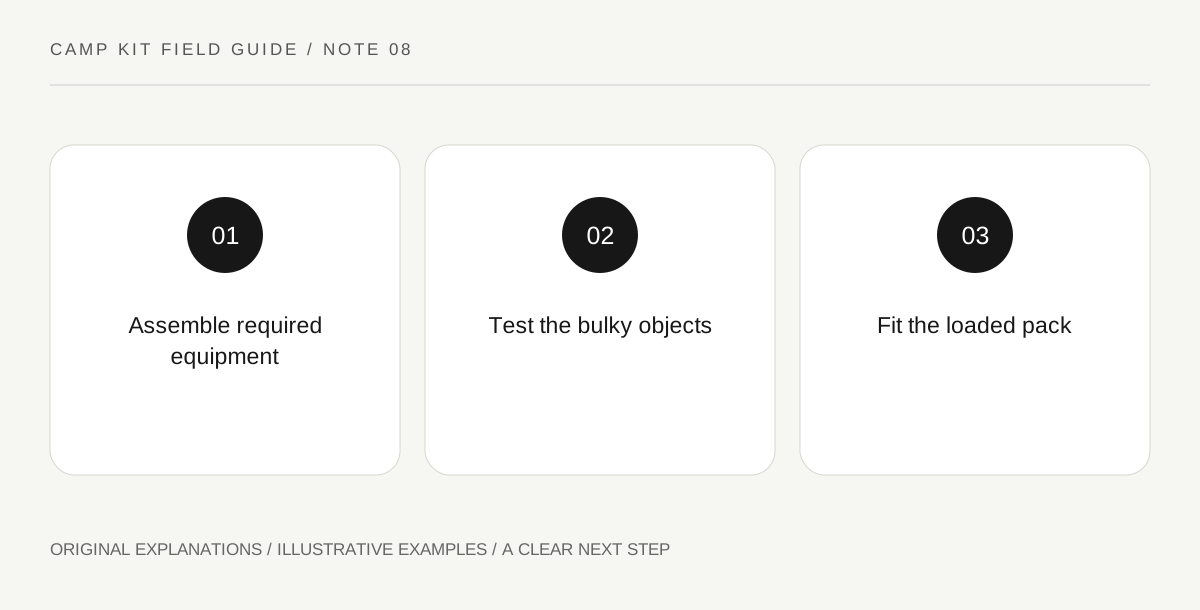
Original explanatory diagram. Read the full method and limitations below.
Build the load from the itinerary
List what this particular overnight trip requires, including current destination rules. A required food-storage container can determine packing space more decisively than a small reduction in clothing. The Denali gear guidance illustrates how a pack must accommodate the whole system, including a bear-resistant container where required.
Separate personal equipment, shared equipment and consumables. Record which items already exist and which are still hypothetical. A capacity estimate based on an imagined ultralight kit can fail once a rented shelter or larger container arrives. Resolve the bulky required items before treating the packing list as a finished load.
Try bulky objects in the actual pack
Use the sleeping bag in its intended transport bag, the shelter package and any required canister. Confirm that the pack closes as designed without forcing the contents against zips or fabric. A volume figure cannot reveal every shape interaction between a rigid container and a tapered pack.
Avoid attaching loose bulky objects outside simply to make an unsuitable pack appear sufficient. Any external carry should follow the pack’s intended attachment system and preserve balance, access and secure retention. A pack that technically contains the items can still be awkward if a required object presses into the back or blocks everything needed during the day.
Assess fit with a representative load
Follow the manufacturer’s torso and harness guidance, then try the loaded pack in a permitted setting. Notice stability, pressure and whether adjustments remain accessible. A short empty-pack fitting does not reproduce the effect of a full overnight load.
The test should use a reasonable representation of food and water, not only the light dry equipment. Record the load and conditions of the trial. This is a practical usability observation, not a guarantee against pain or injury on a longer route. Persistent discomfort or unfamiliar heavy-load needs warrant advice from a qualified fitter and changes to the plan.
Organize access without losing essentials
Keep items needed during the day reachable without unpacking the entire sleep system. At the same time, protect critical dry equipment and follow food-storage rules. The pack arrangement should make transitions easier rather than turning every water stop into a full campsite setup.
For shared gear, confirm who carries each component and what happens if the group separates. One person carrying a tent fly while another carries every pole creates a dependency worth understanding. Capacity is therefore a system decision involving required objects, fit, access and group arrangements. The largest available pack is not automatically the most suitable solution, nor is the smallest one that can be forced shut.
A planning scenario
Two campers plan a managed backcountry route requiring an approved rigid food container. Their soft packing cubes fit a candidate pack, but the actual loaded canister changes the shape and closure. They test the real container with sleep equipment and representative consumables, then revise pack size or equipment allocation. The example is illustrative and does not establish a universal litre capacity or comfortable carrying weight for every camper.
Practical checks
Optional checkboxes save only in this browser.
Questions that come up
Can I choose pack litres from trip length alone?
Trip duration influences food and other needs, but kit bulk, required containers, climate and shared equipment also matter. Assemble the actual load rather than relying on one universal duration-to-volume table.
Does an empty comfortable pack prove loaded fit?
No. A representative load changes pressure, balance and adjustment needs. A loaded trial helps identify problems but still does not guarantee comfort on every route or duration.
References and scope
These sources support the factual background. Examples and exercises are original illustrative teaching material. References do not imply endorsement.
- Denali National Park: Gear checklist — The interaction of a loaded backpack, food storage, shelter, water and navigation in one particular park.
- Rocky Mountain National Park: Wilderness planning checklist — A destination-specific example of an overnight equipment system and changing seasonal needs.