Sleeping-Bag Fit: Check Length, Shoulder Room and Insulation Space
A sleeping bag can have a suitable published rating and still fit poorly. Length, shoulder space, foot position and normal movement influence how it feels and how its insulation is used. Try the complete sleeping arrangement rather than choosing solely from your standing height or the bag’s packed size.
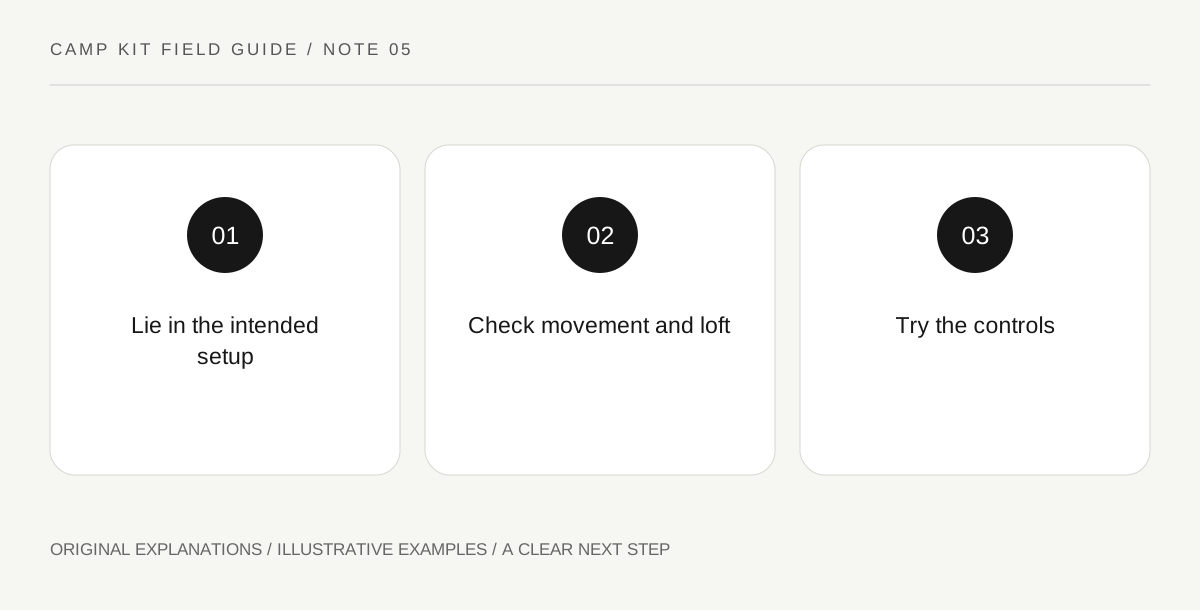
Original explanatory diagram. Read the full method and limitations below.
Start with the intended size range
Read the manufacturer’s fit range and dimensions for the specific model. Your height is a starting point, but sleeping posture can require different space from standing upright. Lie in the bag on the pad you intend to use, with suitable clean clothing, and notice how your feet naturally rest.
A bag that forces your toes against the end may feel different once you relax than when you first slide inside. Excess unused length can also be inconvenient. Use the model’s sizing guidance rather than adding a universal number of centimetres to every person’s height. The useful fit is a match between the bag’s shape and your actual sleeping position.
Check shoulders, hips and turning
Close the bag as intended and assess room at shoulders and hips. Can you make your normal small movements without straining seams or forcing the insulation flat? A side sleeper and a back sleeper may notice different restrictions. The most compact shape is not automatically the most usable for everyone.
If a quilt or alternative system uses pad attachments, include those parts in the trial. The relationship between pad width and attachment arrangement matters. Do not assume that two items from one brand or two products with similar size words are automatically compatible. Check the exact instructions and dimensions before treating the combination as complete.
Distinguish loft information from whole-bag warmth
Fill power describes a property of down loft, not a complete sleeping bag’s comfort rating. The amount and placement of insulation, construction and fit also matter. A larger fill-power number alone does not establish that a bag is warmer or more suitable for your trip.
Compare whole-product specifications on their stated basis, then assess the fit and packed requirements. Avoid compressing insulation with an overly tight sleeping position or improvised restrictive accessories. If the bag is borrowed, inspect its condition and seek the correct care information. The original specification does not prove that an old, damaged or poorly maintained item performs identically today.
Try closures and the morning routine
Operate the zip, hood or other adjustments according to the instructions while lying in the bag. Check that you can find the controls and exit without an awkward struggle. These usability details are easier to resolve in a calm practice setting than after dark in unfamiliar weather.
Practice packing afterward, using the recommended storage and transport methods. The smallest possible compressed bundle is not necessarily the appropriate long-term storage condition. Record which size and pad arrangement you tried, what felt restrictive and which question remains for the manufacturer or rental provider. A fit note is more actionable than a simple description such as comfortable or too small.
A planning scenario
An illustrative shopper fits within a bag’s stated height range, but their relaxed side-sleeping posture pushes the foot end and pulls the shoulder area tight. They try another approved size or shape on the intended pad and compare the full rating information again. They do not assume a higher down fill-power number would solve a geometry problem. This scenario describes a fit check, not a product test or a guaranteed warmth outcome.
Practical checks
Optional checkboxes save only in this browser.
Questions that come up
Does higher fill power automatically mean warmer?
No. It describes down loft, while whole-bag warmth depends on the complete design, insulation quantity and other factors. Read the bag’s relevant rating and fit information together.
Should I buy the longest bag for maximum room?
Not automatically. Length is only one fit dimension, and unnecessary space may be inconvenient. Compare the manufacturer’s range and your actual posture, shoulder room and system compatibility.
References and scope
These sources support the factual background. Examples and exercises are original illustrative teaching material. References do not imply endorsement.
- Cascade Designs: Sleeping-bag fit — Bag length, shape and movement considerations.
- Cascade Designs: Fill power — Fill power describes down loft and does not replace a complete sleeping-bag rating.
- Therm-a-Rest: EN/ISO sleeping-bag ratings — The difference between comfort, limit and extreme reference ratings and individual variation.