A Camping Repair Kit: Pack for Identified Failure Points
A repair pouch becomes more useful when every item has a defined job and a compatible component. Random tape and tools do not establish that you can restore a tent pole, buckle or air-holding pad. Build a small kit around the equipment you actually carry and the problems it can reasonably address.
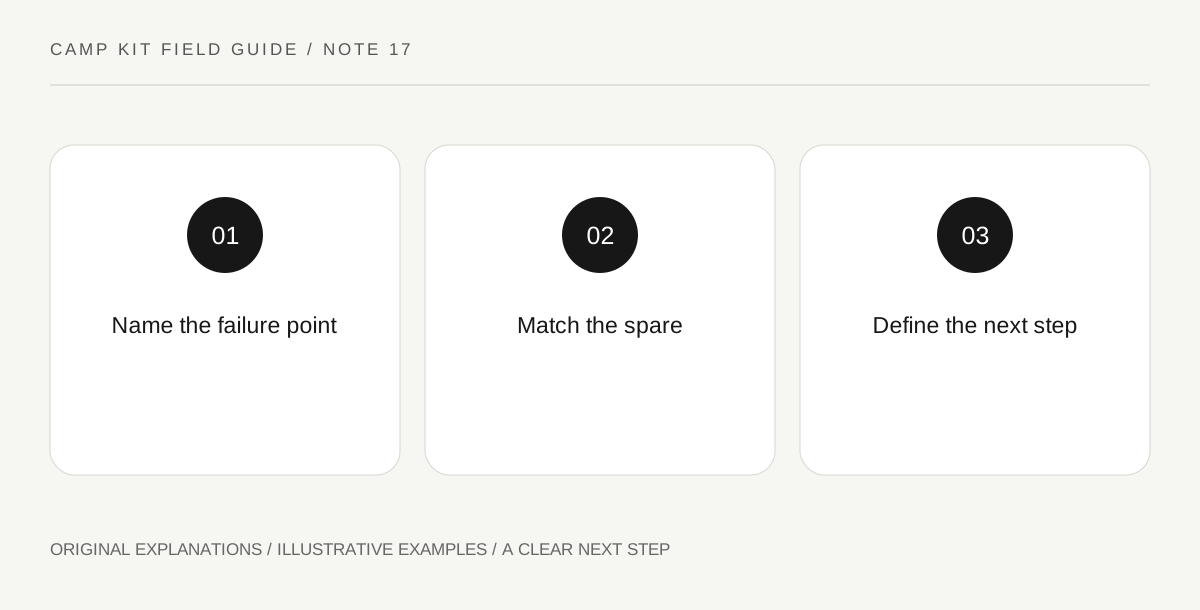
Original explanatory diagram. Read the full method and limitations below.
Inventory equipment-specific vulnerabilities
List the shelter, pack, sleep equipment and other essential systems. For each, identify a plausible failure point and whether the manufacturer provides a field response. A pole segment, attachment, buckle and fabric tear are different problems; they should not all be assigned the same vague solution.
Keep this inventory proportional to the trip. A short managed campsite visit and a remote technical expedition have different requirements and consequences. This guide is not expedition repair training. Where a failure would exceed your ability or the permitted repair options, the plan should include a safer route or replacement rather than a promise to improvise anything necessary.
Match parts and materials
Check the dimensions and intended application of a pole sleeve, buckle or patch. A sleeve must suit the actual pole, and an adhesive must suit the material and repair location. A familiar product name is not sufficient if the equipment version or fabric changed.
Read storage, preparation and curing requirements for repair products. A dried adhesive or missing preparation item can make a kit incomplete despite its tidy appearance. Record exact part identifiers where available. The useful measure is not how many objects fit in a pouch, but whether the contents form a supported response to a specific problem in the equipment being carried.
Practice only supported low-consequence tasks
Learn approved procedures before departure and keep instructions offline. A calm practice check can reveal an inaccessible fastener, mismatched spare part or missing tool. Do not damage good equipment merely to simulate every failure, and do not treat an improvised practice result as manufacturer approval.
Avoid repairs involving fuel systems, pressure components, protective equipment or other hazards unless explicitly covered by appropriate instructions and your competence. A general camping repair article should not turn into unsupported stove servicing. The boundary between a permitted field adjustment and professional repair belongs in the plan as clearly as the location of the tool.
Define what happens after a temporary fix
Some field responses are temporary and require inspection or permanent repair later. Label the affected equipment, record what happened and follow the manufacturer’s next steps before another demanding trip. Packing a repaired item away without a note can hide an unresolved problem until the next departure.
Also decide what happens if the repair cannot be made. A retreat option or replacement arrangement may be more important than one additional accessory. Share the kit’s location and relevant instructions with the group. A single person carrying all spares and all knowledge creates a dependency that should be deliberate rather than accidental.
A planning scenario
A fictional group’s pouch contains an old fabric patch but no compatible pole sleeve for its borrowed shelter. Their inventory reveals the mismatch before travel. They obtain the correct supported spare, retain the instructions and agree on a route change if a major structural failure occurs. This example describes kit preparation; it does not demonstrate a repair or certify that a temporary fix can handle severe weather.
Practical checks
Optional checkboxes save only in this browser.
Questions that come up
Is one kind of tape enough for every repair?
No. Materials, loads, pressure and environmental conditions differ. Use manufacturer-supported methods where available and distinguish an improvised temporary measure from a verified repair.
Should I repair a stove in the field from a general guide?
Do not use a general article as a servicing procedure. Follow the exact manufacturer’s permitted maintenance instructions and your competence; unresolved fuel-system problems require a different plan.
References and scope
These sources support the factual background. Examples and exercises are original illustrative teaching material. References do not imply endorsement.
- Cascade Designs: Avoiding sleeping-pad punctures — Careful surface choice and protection from sharp objects and pets.
- Rocky Mountain National Park: Wilderness planning checklist — A destination-specific example of an overnight equipment system and changing seasonal needs.
- MSR: PocketRocket 2 owner instructions — An example of model-specific stove, fuel, cookware and windscreen restrictions; not universal operating instructions.