Bear-Resistant Food Storage: Check the Allowed Model and Pack the Real Contents
A container described as bear-resistant is not automatically accepted at every destination. Rules can specify permitted designs and storage practices. Check the current local requirements, then test the complete food and scented-item load in the actual approved container before deciding that its advertised capacity is sufficient.
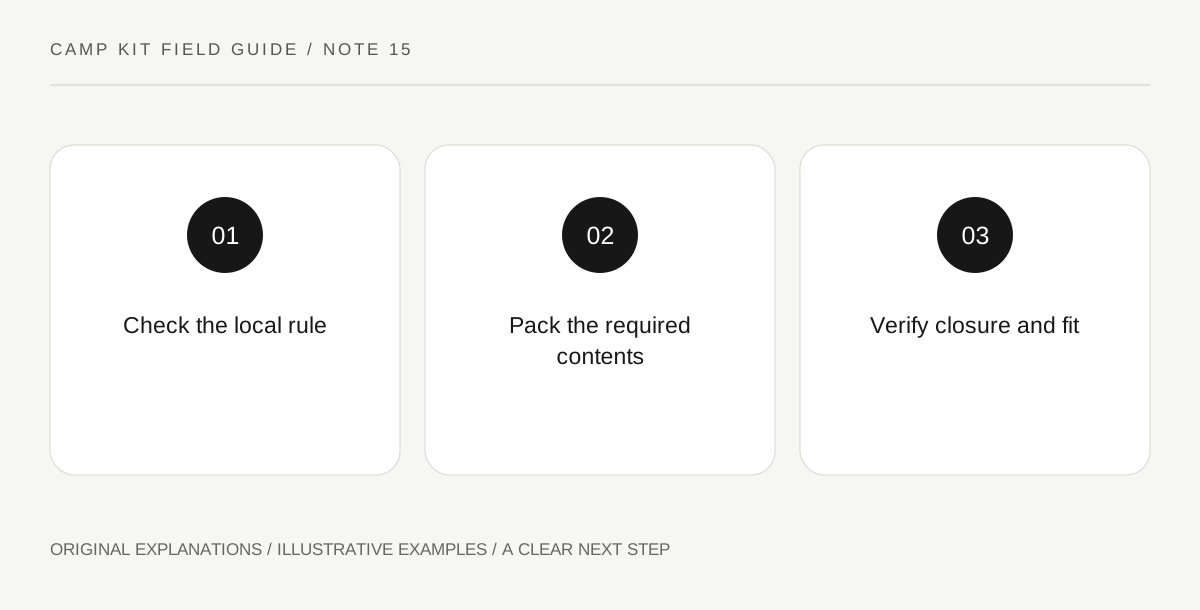
Original explanatory diagram. Read the full method and limitations below.
Use the destination’s current rule
Read the land manager’s food-storage requirements for the specific route and campsite. A destination can maintain an allowed-container list, as Yosemite does. Approval in one park or a generic retailer description does not establish acceptance everywhere else.
Record the exact container model and any version details relevant to the rule. If the trip crosses management boundaries, check each applicable area. Do not substitute a soft bag, cooler or ordinary sealed box merely because it contains food neatly. The correct choice follows the destination’s current requirements, not an assumed universal meaning of animal-proof storage.
List everything that must fit
Food is only part of the storage question where local rules also cover rubbish, toiletries or other scented items. Read the applicable list and gather the actual contents. Packaging shape and rigid items can use more space than an estimated food volume suggests.
Test the beginning-of-trip load, when food quantities may be greatest, and consider how rubbish is retained later. Repack only where appropriate while preserving identification, food safety and required information. Do not leave required items outside because a capacity estimate was optimistic. A container is suitable only when the real required load fits and it can close correctly as designed.
Practice the approved closure and inspect condition
Learn the exact opening and closing method from the manufacturer before departure. A container that is present but incorrectly closed does not provide its intended function. Check for cracks, damaged closures or other issues according to the product instructions and land-manager guidance.
Do not modify closures or add an improvised mechanism to force an overfilled container shut. Resolve damage or capacity problems before the trip. If renting, confirm the model and inspect the actual item rather than relying on a reservation’s general description. Keep any necessary instructions available to the people responsible for storing the contents at camp.
Fit it into the whole camping arrangement
A rigid container can change backpack shape, shared load and campsite organization. Test it with shelter, sleep equipment and consumables rather than adding it after choosing the pack. At camp, follow the current local placement and use requirements; this guide does not provide one universal storage distance.
Keep food handling and cleanup consistent with the storage plan. Odours and scraps can remain even when the main food package is put away. A container is one component of responsible camping, not permission to leave food unattended or feed wildlife. When rules, capacity or correct use remain unresolved, revise the equipment or itinerary before departure.
A planning scenario
An illustrative group chooses a container accepted for its destination, then discovers the first-night food plus required scented items prevent proper closure. They revise the contents or use another allowed arrangement before travel and test the full pack again. They do not force the lid or leave required items outside. This scenario teaches capacity verification and does not certify an unnamed container or prescribe a storage method for every park.
Practical checks
Optional checkboxes save only in this browser.
Questions that come up
Is a bear-resistant label enough for every park?
No. Local requirements and allowed-model lists can differ. Verify the exact destination and model rather than assuming one approval transfers everywhere.
Can I use an ordinary cooler if it seals tightly?
A tight seal does not establish the required wildlife resistance or local acceptance. Follow the destination’s actual rules and any specified approved-container requirements.
References and scope
These sources support the factual background. Examples and exercises are original illustrative teaching material. References do not imply endorsement.
- Yosemite National Park: Allowed food-storage containers — An example of a destination-specific allowed-container list, rather than a universal bear-storage rule.
- Rocky Mountain National Park: Wilderness planning checklist — A destination-specific example of an overnight equipment system and changing seasonal needs.
- Denali National Park: Gear checklist — The interaction of a loaded backpack, food storage, shelter, water and navigation in one particular park.