Inflatable Pads: Check the Valve and Carry a Compatible Repair Method
An inflatable pad’s small valve and repair kit matter as much as its packed size when something goes wrong. Learn the controls and exact repair method before departure. A random patch or a familiar-looking valve is not evidence that you can restore the particular pad you are carrying.
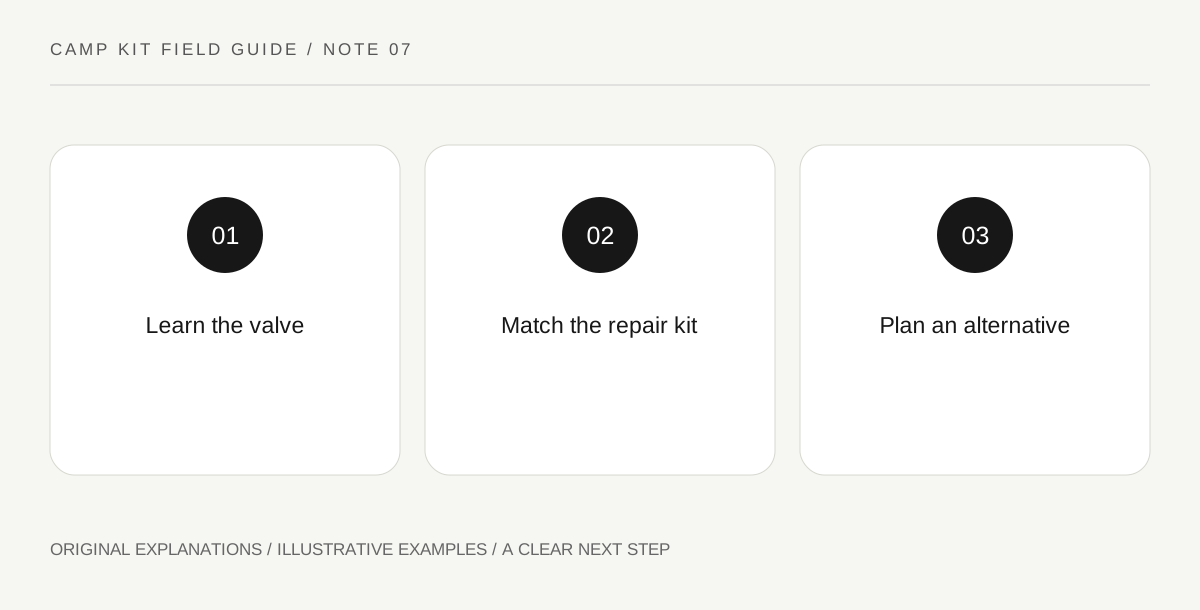
Original explanatory diagram. Read the full method and limitations below.
Identify the valve and inflation system
Read the manual for the exact pad and valve generation. Controls can differ even within one product family. Practice inflation and deflation on a clean permitted surface, using the approved pump or method. Confirm that a supplied pump accessory actually connects to the valve you have.
Do not infer operation from a different pad or force a connector that seems almost right. A small compatibility problem at home is easier to resolve than a damaged valve at camp. Store the instructions where they remain available offline, including any model identification needed when asking the rental provider or manufacturer for help.
Distinguish a suspected leak from an unclosed control
Before diagnosing damage, check that the valve is closed as the instructions require and that any control has not been left in a deflation position. Changes in firmness can have more than one explanation; a brief impression alone does not locate a puncture.
Use the manufacturer’s specified inspection or leak-finding process rather than improvising a damaging test. Do not apply heat, unsupported chemicals or excessive pressure to force an answer. If the pad cannot be relied on after the approved checks, revise the equipment or trip. A guide cannot remotely verify that an uncertain pad will remain inflated all night.
Match patches to fabric and conditions
A repair product needs to be compatible with the pad material and intended repair location. A patch designed for a tent mesh tear is not automatically suitable for an air-holding surface. Adhesive preparation and curing requirements can also differ.
Inventory the actual kit rather than assuming a small pouch contains everything needed. Read whether the repair is temporary or intended to be permanent and what conditions it requires. If a repair needs time or a dry surface, that affects the practical plan. Carrying a patch without understanding its limits does not establish an adequate response to a large tear or damaged valve.
Prevent avoidable damage and plan the alternative
Protect the pad from sharp objects, unsuitable surfaces and pets. The manufacturer’s puncture guidance highlights that a tent floor alone does not eliminate every hazard. Use appropriate protective layers and low-impact campsite practices without assuming any layer makes rough ground harmless.
Before the trip, decide what a failed pad would mean for the sleep system and route. The response may be retreat, replacement or a suitable alternative already planned. It should not be an improvised promise that a few clothes provide equivalent insulation. After a field repair, follow the manufacturer’s inspection and permanent-repair advice before treating the item as ready for demanding use again.
A planning scenario
A camper discovers their borrowed pad uses a different valve from their pump sack. They resolve the connector issue before travel, then check that the repair pouch is suitable for the pad fabric and still contains usable materials. Their notebook also records a route change if the pad fails. This scenario teaches preparation; it does not show a completed repair or guarantee that any patch can restore a torn mattress.
Practical checks
Optional checkboxes save only in this browser.
Questions that come up
Can ordinary household tape be my complete repair plan?
Do not assume it is compatible, durable or adequate for an air-holding repair. Follow the exact manufacturer’s instructions and distinguish an improvised temporary measure from a verified repair.
Does a tent floor prevent all punctures?
No. Sharp objects and other damage sources can still reach a pad. Appropriate surface choice, protective layers and care reduce avoidable problems but do not guarantee that damage cannot occur.
References and scope
These sources support the factual background. Examples and exercises are original illustrative teaching material. References do not imply endorsement.
- Cascade Designs: Avoiding sleeping-pad punctures — Careful surface choice and protection from sharp objects and pets.
- Rocky Mountain National Park: Wilderness planning checklist — A destination-specific example of an overnight equipment system and changing seasonal needs.