Sleeping-Bag Ratings: Read Comfort, Limit and Conditions Separately
The temperature printed in a sleeping bag’s name may not mean what you assume. Standardized reference ratings describe particular test conditions, and individual warmth varies. Read the full rating information and build a complete sleep system before using one headline number to plan an overnight trip.
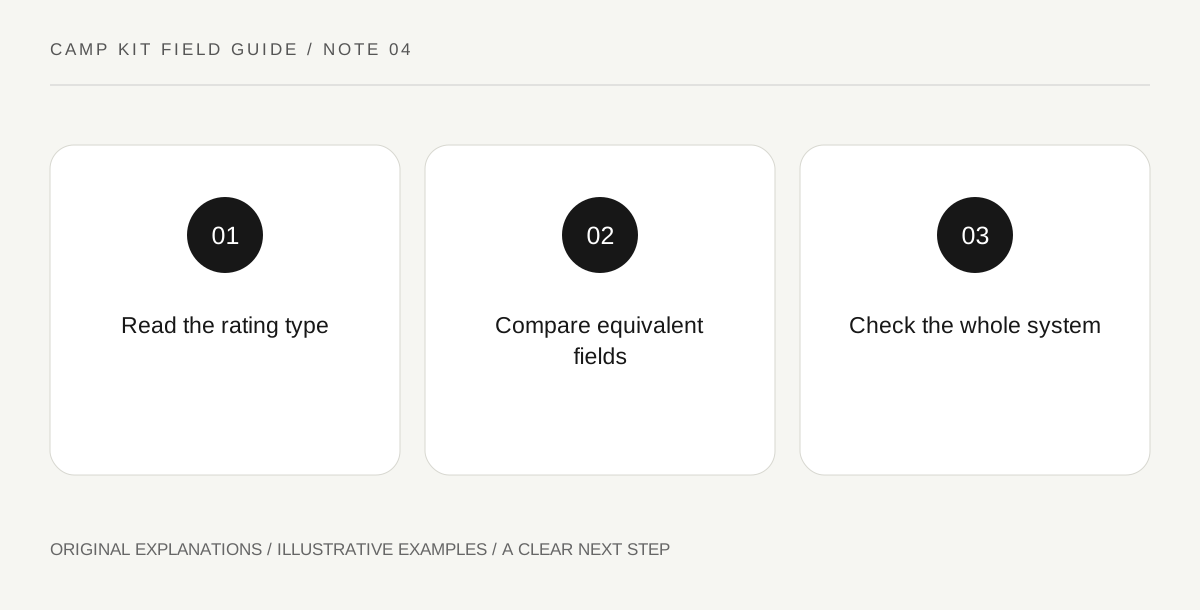
Original explanatory diagram. Read the full method and limitations below.
Find the complete rating information
Look for the manufacturer’s stated test basis and the separate comfort and limit information where supplied. A model name is a shorthand identifier, not a complete explanation of the test. An extreme or survival reference is not a comfortable overnight planning target.
Read current specifications for the exact size and version, because a familiar product name does not establish identical construction. If borrowing a bag with an unclear label, ask the owner or manufacturer for the model information. Guessing the rating from colour, thickness or a remembered advertisement is not a substitute for a known reference. Record uncertainty before relying on the bag in demanding conditions.
Compare the same kind of reference
Comparing one bag’s comfort figure with another bag’s limit figure can create a misleading impression. Put equivalent fields beside each other, along with the stated test basis. A small difference in a headline number should not outweigh uncertainty about which field is being compared.
The manufacturer’s explanation of EN/ISO ranges provides context, but a standardized test is not a guarantee for every person. Body characteristics, fit, clothing and the rest of the sleep setup affect experience. Use the reference as one part of a conservative choice and seek competent advice when expected conditions exceed your experience. Do not plan to discover your personal limit remotely.
Include the pad and dry clothing
A sleeping bag does not operate independently of the surface beneath it. A suitably insulated pad is part of the sleep system, while clothing and moisture management also matter. A thicker-looking bag cannot be assumed to correct an unsuitable pad or wet bedding.
List the actual bag, pad and intended dry sleeping layers together. Check compatibility and manufacturer guidance rather than adding product ratings as though they were a simple temperature equation. The system should fit the anticipated environment with an appropriate margin; this article does not calculate a universally safe minimum temperature or certify a combination of items.
Use a low-consequence practice night
A practice setup near a safe exit or at home can reveal fit, awkward closures and a pad that slips away. It does not prove performance in much colder or harsher conditions. Keep the trial’s actual conditions in the record and avoid turning one comfortable night into a claim about all weather.
If the forecast or route changes beyond the planned system, revise the trip or equipment rather than defending a purchase. Rental or specialist advice can be useful when the expected conditions are unfamiliar. A rating is valuable precisely because its meaning is limited and defined; stretching it into a personal guarantee removes that value.
A planning scenario
Two hypothetical bags both display a similar temperature in their names. One specification uses a comfort figure for that number and the other a limit figure. A shopper first compares the equivalent fields, then considers pad insulation and fit. They do not conclude the bags are interchangeable from the names alone. No temperatures in this scenario establish a safe overnight threshold; the example teaches how to read the reference categories.
Practical checks
Optional checkboxes save only in this browser.
Questions that come up
Is an extreme rating a comfort recommendation?
No. Do not use an extreme or survival reference as a normal comfort target. Read the manufacturer’s definitions and choose a suitable system with competent advice for unfamiliar conditions.
Can a warm practice night verify a cold-weather rating for me?
No. It can reveal usability problems in those practice conditions. It does not reproduce a standardized test or guarantee your comfort and safety during a colder trip.
References and scope
These sources support the factual background. Examples and exercises are original illustrative teaching material. References do not imply endorsement.
- Therm-a-Rest: EN/ISO sleeping-bag ratings — The difference between comfort, limit and extreme reference ratings and individual variation.
- Cascade Designs: Sleeping-pad R-value — Thermal resistance and comparisons among pads tested on a common basis.