Camp Stove Compatibility: Match Fuel, Pot and Manufacturer Restrictions
A stove, fuel container and pot are a connected system. Similar-looking threads or a stable-looking improvised arrangement do not establish compatibility. Before a trip, identify the exact components and read the current manufacturer instructions, including restrictions that may differ sharply from those of another stove you have used.
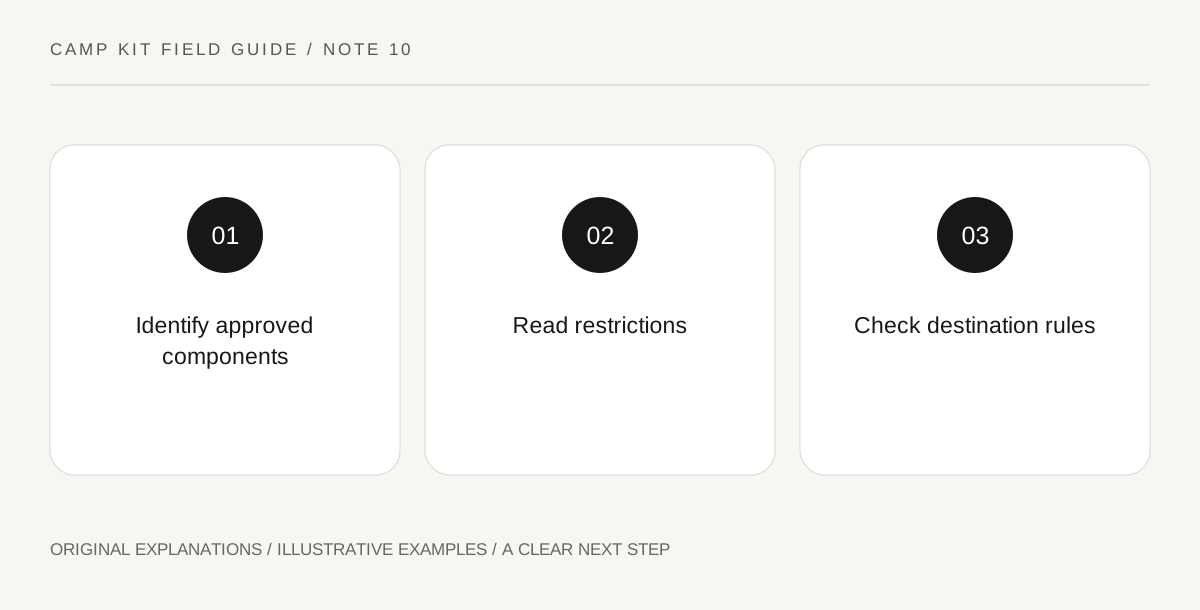
Original explanatory diagram. Read the full method and limitations below.
Identify the model and intended fuel
Record the stove model and the fuel types and containers explicitly permitted by its manual. Do not assume a container that appears to connect is approved. Product names, connectors and fuel formulations can differ, and an unsupported combination can introduce serious hazards.
Keep the complete manual available offline and ask the manufacturer or rental provider about unresolved compatibility questions before departure. This article is a planning guide, not an operating procedure. It does not replace instructions for assembly, lighting, shutdown, leak response or maintenance. If the correct manual and compatible components cannot be established, choose another arrangement or revise the meal plan.
Read cookware and support limitations
Check the intended pot dimensions, loaded weight and any required support arrangement in the exact stove instructions. A large pot that rests on small supports can create a different stability problem from the pot used in a product photograph. Include food or water when considering the complete load.
Do not infer permission from a setup that appears balanced briefly on a kitchen floor. Intended use, clearances and manufacturer restrictions still apply. An integrated stove system may also rely on specific approved cookware. A familiar pot from another kit is not automatically interchangeable, even when both products are marketed for backpacking.
Treat wind protection as model-specific
Wind affects cooking, but an improvised screen can create hazardous heat around a fuel container. The cited PocketRocket 2 manual, for example, prohibits windscreens. That restriction illustrates why advice copied from another stove design cannot be treated as universal.
Do not surround a stove with foil, rocks or other improvised barriers to defeat a stated restriction. Follow the exact product guidance and local fire rules. Changing meal timing, location within permitted outdoor areas or the trip plan can be more appropriate than inventing an unsupported modification. No convenience benefit makes an unapproved fuel-heating arrangement an established safe system.
Keep the cooking location separate from shelter
Fuel appliances can create carbon monoxide and fire hazards. Follow all outdoor-use and clearance restrictions; do not operate a camping stove inside a tent, vehicle, camper or other enclosed space. Rain or cold does not make an enclosed sleeping area an approved kitchen.
For the trip plan, confirm whether current land-manager rules permit the stove and fuel type at all. A product that is legal to own may still be restricted at a particular destination or during a fire order. Keep a suitable alternative food plan and avoid relying on a fire or stove that cannot be used under the actual conditions. Compatibility includes the site rules as well as physical components.
A planning scenario
An illustrative camper owns a small upright canister stove and considers adding a foil screen copied from a different stove’s photograph. Reading the actual manual reveals that the screen is prohibited. They keep the approved configuration, verify the pot and fuel requirements and change the meal plan if conditions do not permit appropriate outdoor use. This is a document-checking scenario, not a demonstration of stove operation or a product endorsement.
Practical checks
Optional checkboxes save only in this browser.
Questions that come up
If a fuel container connects, is it compatible?
Connection appearance alone does not establish approval. Use only the fuel and container arrangements permitted by the exact manufacturer instructions and resolve uncertainty before use.
Can I cook in the tent during rain?
Do not use a camping stove in an enclosed shelter. Carbon-monoxide and fire hazards remain. Follow the exact equipment restrictions and revise the food or trip plan when appropriate outdoor use is not possible.
References and scope
These sources support the factual background. Examples and exercises are original illustrative teaching material. References do not imply endorsement.
- MSR: PocketRocket 2 owner instructions — An example of model-specific stove, fuel, cookware and windscreen restrictions; not universal operating instructions.
- National Park Service: Cooking in camp — Meal planning, food organization and campsite cleanup; destination rules take priority.